What is an NPI number?
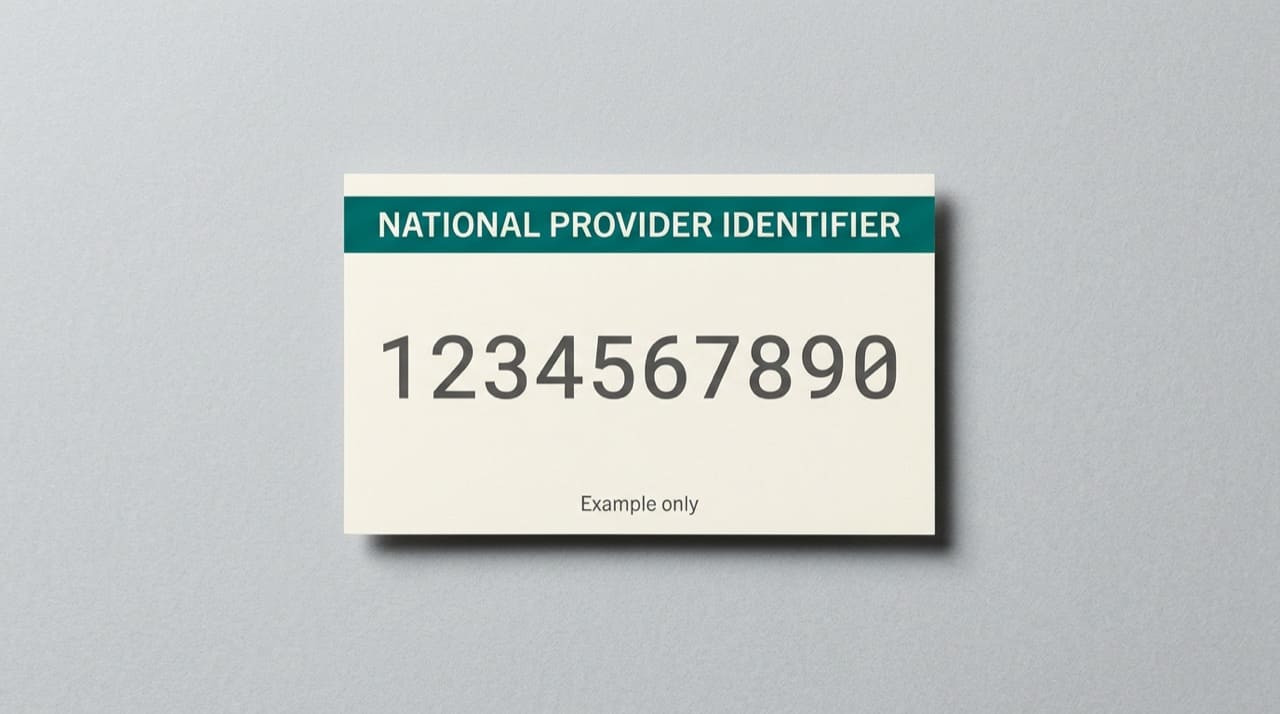
An NPI (National Provider Identifier) is a unique 10-digit number CMS assigns through NPPES for enumerated health care providers and organizations. U.S. health care trading partners use it on HIPAA standard transactions when the implementation guide requires an NPI in a given role (not as a password, bank code, or generic “provider ID”).
You’re on hold with a payer, or you’re staring at a portal that won’t advance until a field is filled, and someone says: “What’s the NPI?” They mean that ten-digit NPPES value. If you’ve ever watched two offices argue because one spreadsheet column was labeled “Provider ID” and nobody documented whether that meant NPI, tax ID, or an internal serial, you already know why a national identifier exists.
What an NPI does on claims and credentialing
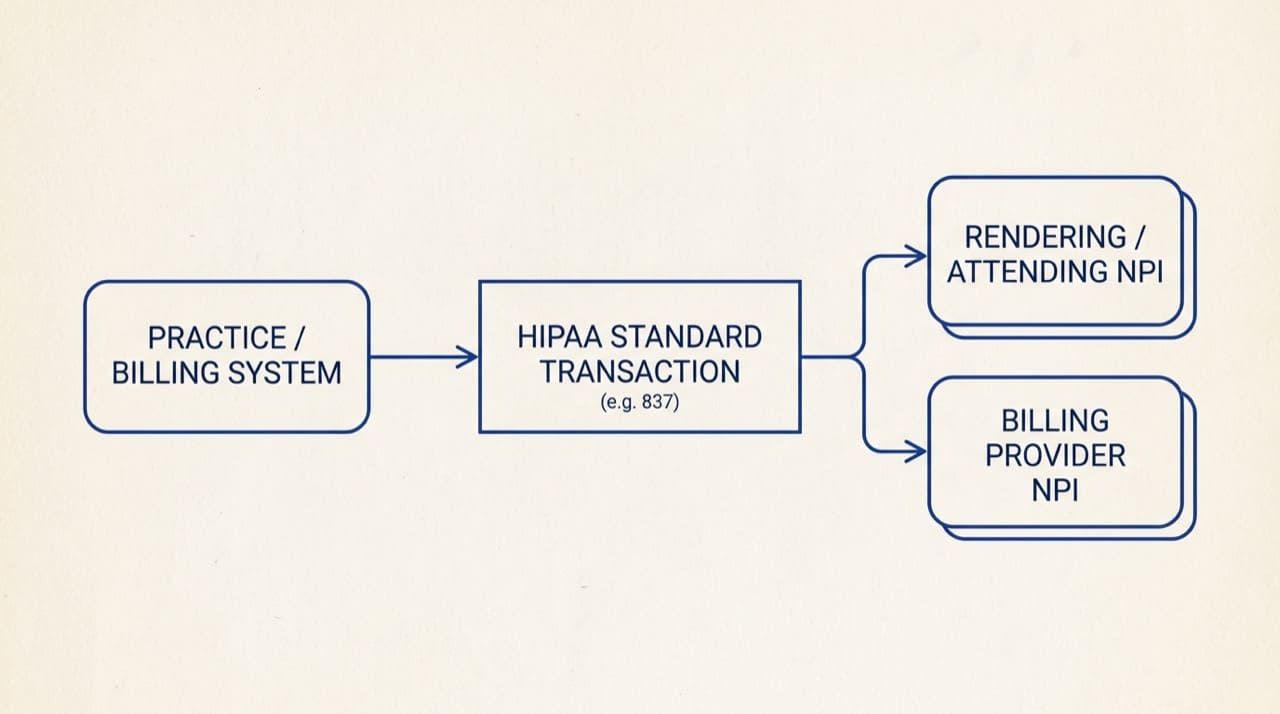
Picture a claim leaving your practice management system. Somewhere in that payload, the implementation guide expects an NPI in specific roles (who rendered care, who’s billing, which facility, depending on the scenario). Clearinghouses and payers use those slots to route the file. When the number is wrong, inactive, or in the wrong role, you don’t get a polite essay back. You get an edit code and a ticket queue.
Credentialing teams line up a human with the public row on a checklist. Researchers join NPPES extracts; patients sometimes need digits on a reimbursement form.
Who needs an NPI?
Individuals who meet the definition of a health care provider for enumeration can receive a Type 1 NPI. Organizations (a legal clinic entity, a hospital shell, a pharmacy company) get a Type 2 when that’s what the structure calls for. The split matters on claims even when your cousin still calls both “the tax number thing.”
CMS’s own NPI overview settles two spreadsheet fights: the number stays the same through typical name and address updates in NPPES, and the ten digits don’t encode your city or specialty. Taxonomy and addresses live in other public fields.
That overview also says all health care providers who are HIPAA-covered entities must obtain an NPI, for individuals and organizations alike. Counsel still owns odd cases; treat CMS’s material as the map, not your final policy.
HIPAA’s standard electronic transactions are a big part of why trading partners ask for an NPI on claims and related files: it’s the national identifier used in those roles. That’s often the real reason behind “we need your NPI this afternoon” even when nobody on the call says HIPAA out loud.
New hires and trainees shouldn’t copy whatever their roommate did. Programs and employers set timing. If you’re building onboarding docs, write the rule once where billing and credentialing can both read it.
What it is not (save yourself a headache)
An NPI doesn’t prove you’re licensed this week, that Medicare paid last month’s claim, or that a payer will honor a rate. It’s an administrative key. Licensure still lives at the board. Enrollment still lives at the plan. If someone treats a clean NPI search like a character reference, your compliance lead will eventually have a quiet word.
We run NPIPublicData.org as a fast way to read the same public NPI data that NPPES publishes; lots of sites mirror those fields. We’re not part of CMS. If your policy says “print the government screen,” use CMS’s own tools and keep the date in the corner of the page. Their NPPES help center is the right place to start when you want official instructions straight from the registry side, not a paraphrase from us.
Where NPIs show up (even when the label doesn’t say “NPI”)
Remittance advice, eligibility responses, and prior-authorization traffic still lean on the same identifier family even when the on-screen label says “billing provider” or “rendering.” That’s why training decks should show one real screenshot from your clearinghouse with the circle drawn on the field, not only a glossary entry that says “NPI.” New staff remember the picture.
Vendor contracts sometimes bury the requirement in an appendix. If you’re negotiating, ask plainly whether their file layout expects Type 1, Type 2, or both for your specialty. “We’ll figure it out at testing” is how February becomes May.
Patients and the public row
When a patient looks up a provider online, they’re usually trying to match a name to an address they recognize, not to memorize taxonomy jargon. The registry can help with that narrow job. It won’t tell them whether a clinician is kind, on time, or in network tomorrow. Keep those lanes separate when you explain what they’re seeing.
If you work the front desk, consider a printed line on your FAQ sheet: “Here’s how to find our practice NPI if your insurer asks.” That cuts repeat phone traffic more than a longer policy memo nobody reads.
Related guides and tools on this site
If you’re ready to search, use NPI Lookup on NPIPublicData.org. It’s built for typing a ten-digit value or a name when you’re in a hurry. For an official row pull, use CMS’s NPPES NPI Registry search the same day you make a decision. For a written lookup habit your team can share, follow how to look up a provider’s NPI.
When you’re trying to understand why the registry distinguishes people from businesses, jump to Type 1 vs Type 2 NPI explained next; it saves a lot of second-guessing before you touch a claim template.
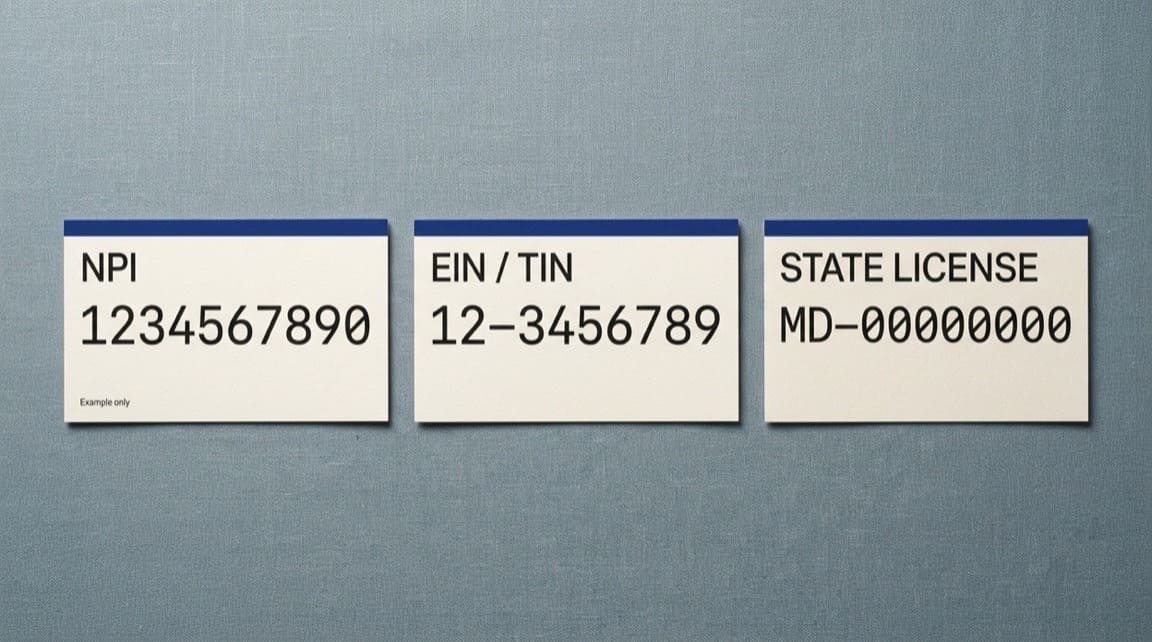
If nobody labeled the “provider ID” box, NPI vs other provider IDs sorts tax IDs, licenses, and payer numbers so you don’t paste the wrong value. If the question is how many numbers a career can carry, read how many NPIs a provider can have.
For the boring-but-important limits on how we present data (and how ads work here), read the Disclaimer once so you’re not surprised later.
A small habit that pays off
Before you import a vendor’s provider roster into a new system, spot-check a handful of NPIs in NPPES (see the official search linked in the section above) or whatever your compliance policy calls the system of record. You’ll catch transposed digits and “this person left years ago” rows before they become everyone’s emergency on a go-live weekend.
If our pages disagree with CMS for the same NPI on the same day after an apples-to-apples check, contact us. We can’t edit NPPES, but we can fix our display bugs.
If you’re mapping JSON fields in software, skim the API docs before you wire retries. Rate limits exist for a reason, and your future self will prefer a polite backoff to a ban.
Bookmark the FAQ if you keep answering the same three questions from new hires. Point them there first, then answer what’s still unclear.