How do pharmacist and pharmacy NPIs work together?
Pharmacists who meet enumeration rules hold a Type 1 (individual) NPI for their professional identity. The legal business that contracts, enrolls, and often bills as an organization usually holds a Type 2 (organization) NPI for the pharmacy or parent entity. Forms and claims ask for different numbers in different boxes; your payer implementation guide and employer policy beat habit from a previous job.
Verify names, addresses, taxonomy, and status on the NPPES NPI Registry search. Program context: CMS NPI overview. Public file and refresh framing: Data Dissemination.
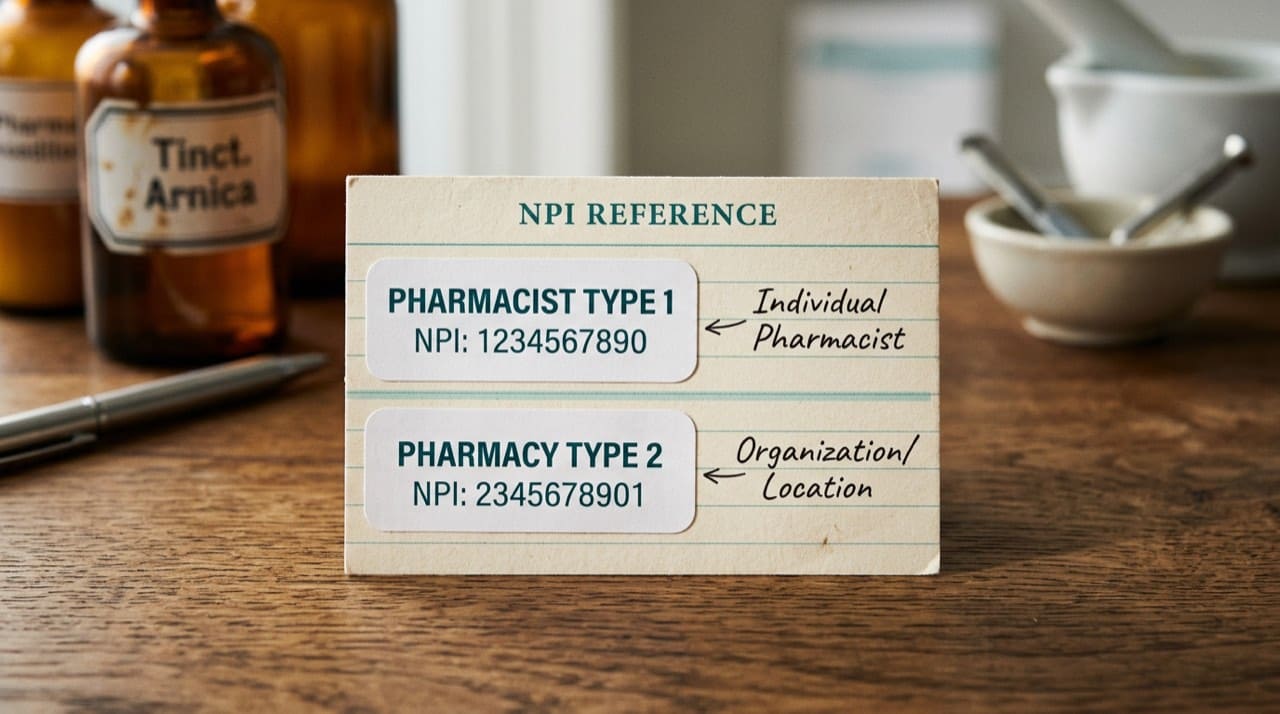
Type 1 versus Type 2 refresher
Read Type 1 vs Type 2 NPI explained once, then map your employer's cheat sheet to the loops your top payers use. For corporate parent versus storefront patterns similar to medical groups, skim NPI for group practices and clinics.
Taxonomy codes on pharmacy rows
Taxonomy selections describe provider type for administrative purposes and help payers sort services. Codes change as NUCC updates the set. For vocabulary, start with understanding NPI taxonomy codes and let compliance own the live crosswalk.
PBMs, wholesalers, and clearinghouses
Trading partners keep their own tables. When a rejection says invalid NPI, compare CMS today, your clearinghouse profile, and the payer portal. Document vendor ticket numbers when they promise a refresh.
Claim-line habits
For rendering versus billing NPI questions on professional or supplier claims, align with billing, claims, and NPI basics for billers and your implementation guide.
Seasonal clinics and batch forms
Verify pre-filled organization NPI templates each flu season. One transposed digit breaks reimbursement workflows for hundreds of patients.
Float staff, moonlighting, and HR imports
People who work multiple sites should confirm which NPI each system imported after a merger. HR clones rows incorrectly more often than IT admits. A quarterly self-check against CMS prevents flu-season surprises when you pick up a shift at a store you rarely visit.
Compounding, specialty services, and launches
When you add compounding or specialty lines, taxonomy and addresses in NPPES often need coordinated updates. Marketing, bag stuffers, and the public registry should not contradict each other during launch week. Multi-state licenses complicate which address is primary; involve counsel when contracts disagree.
Identifiers beyond the NPI
Pharmacies still juggle state license numbers, NCPDP identifiers, and payer-specific codes. The NPI is one column in that wallet, not the whole story. For a wider map, skim NPI vs other provider identifiers before you chase the wrong field in a portal.
Immunization documentation and schools
Schools usually rely on state immunization records rather than an NPI on every line. If a form explicitly asks for an NPI, confirm which entity they are trying to identify before you hand a personal number meant only for credentialing.
Technicians and customer-facing coaching
Train technicians who help patients with portals to read NPI digits slowly and to ask whether the form wants the store or the pharmacist. Small coaching moments prevent transpositions that take weeks to unwind.
Mail order, long-term care, and hybrid models
Delivery channels change storefront workflows but repeat the same administrative pattern: a legal entity carries the Type 2 NPI that contracts expect, while individual pharmacists keep Type 1 numbers for their professional footprint. Map those roles before you reorganize an org chart or split billing systems. When a payer asks for service facility versus billing provider, pull definitions from their manual instead of guessing from muscle memory picked up at a previous employer.
Release notes and vendor rulesets
Clearinghouses and PBMs adjust edits without asking your permission. Subscribe to vendor release notes the way you subscribe to drug recall alerts. When scrubbers change linkage checks, the NPI on the claim might be perfect while a taxonomy or address pairing suddenly fails until someone updates NPPES or the payer profile.
Credentialing packets
Hospital and health-system credentialing wants dated CMS evidence beside licenses. Workflow habits overlap with credentialing and NPI verification workflows even when the clinical setting is pharmacy, not surgery.
Independent site
We do not run NPPES. Read the Disclaimer. Display or caching questions: Contact us with NPI and timestamp.
Practical next steps
Write two lines on an index card: your Type 1 NPI if you have one, and the Type 2 NPI your manager authorizes for patient forms. Date it and replace after rebrands. Schedule an annual reminder to re-check NPPES after license renewal season.